


By Ven. David Chimezie Nwanekpe
Concerned Clergyman and Ecclesiastical Observer
Rector, Anglican Church of the Holy Spirit, Bronx
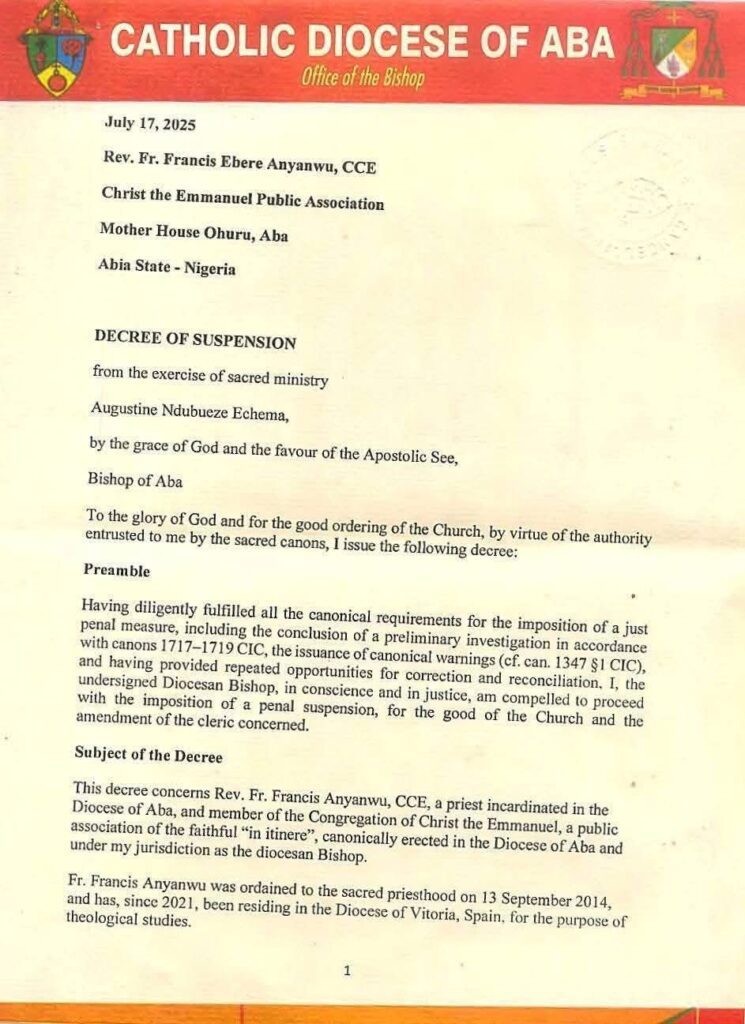
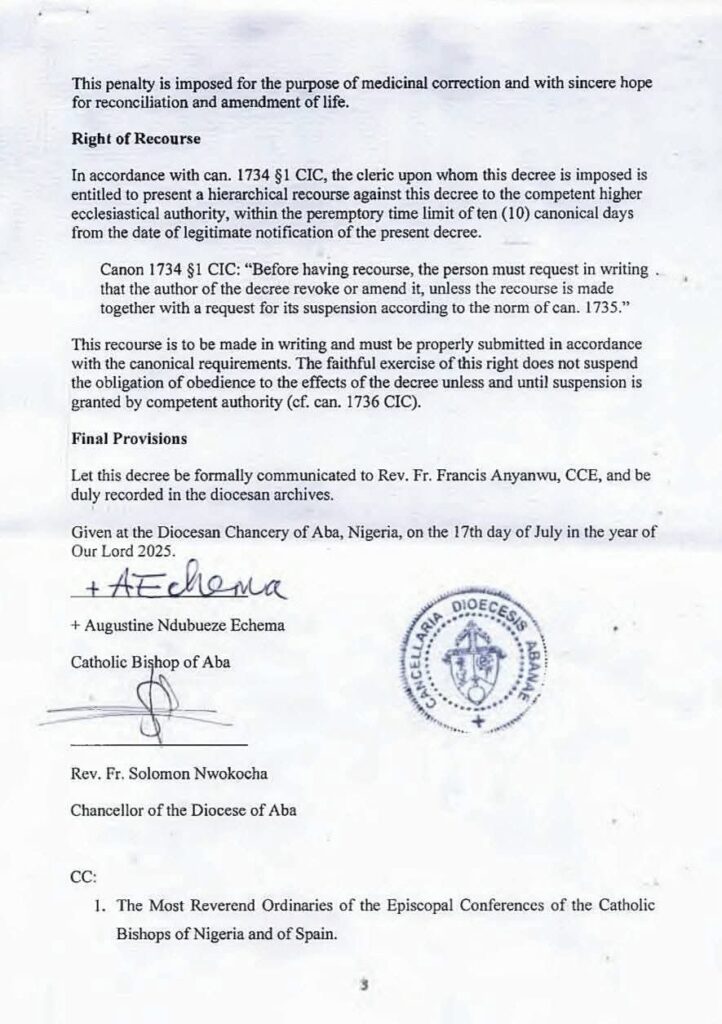
On July 17, 2025, the Catholic Diocese of Aba issued a decree suspending Rev. Fr. Francis Ebere Anyanwu from priestly ministry. The statement, signed by Bishop Augustine Ndubueze Echema, accused Fr. Anyanwu of multiple ecclesiastical violations, ranging from disobedience to defamatory conduct.

After prayerfully reviewing this decree, I feel compelled to respond—not in defiance or rebellion—but in defense of truth, fairness, and the sacred responsibilities entrusted to us as ministers of the gospel. What follows is a heartfelt plea for justice, transparency, and the restoration of integrity within our ecclesiastical structures.
1. A Case of Conflict and Bias?
It is deeply concerning that the same bishop alleged to be in conflict with Fr. Anyanwu is also the sole authority behind the decree of suspension. Ecclesiastical justice must be above suspicion of partiality. When a personal conflict exists, justice demands an impartial and independent canonical body to investigate and decide. Without this, we risk turning spiritual authority into a mechanism of suppression rather than shepherding.
2. Where Is the Evidence?
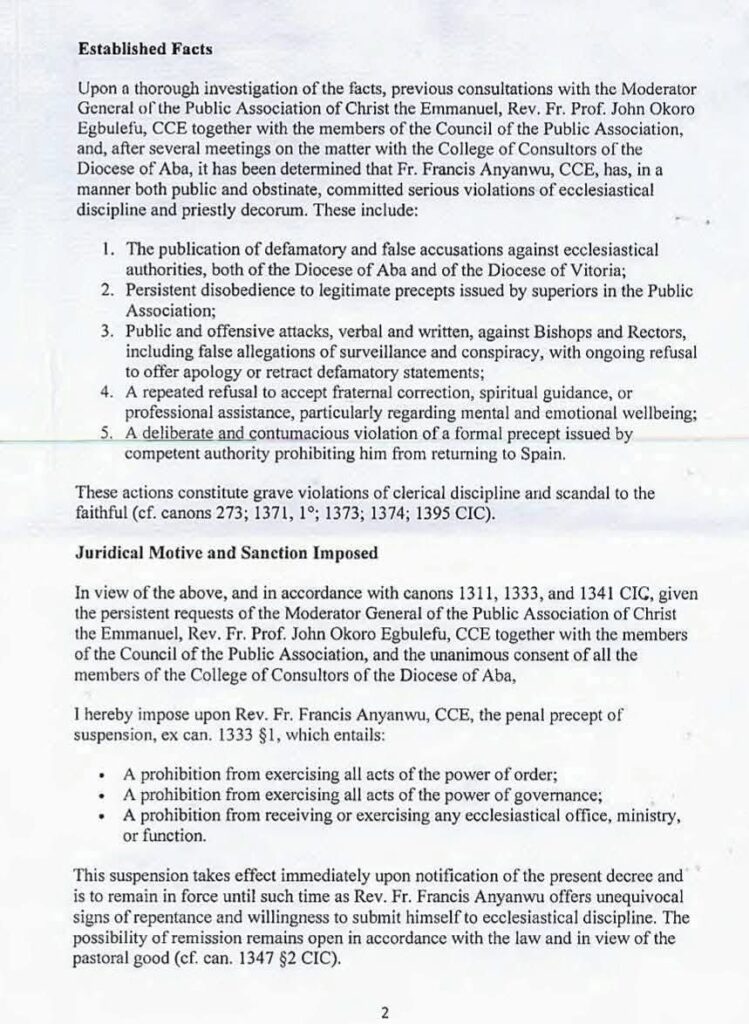
The decree refers to “defamatory” and “offensive” statements allegedly made by Fr. Anyanwu—yet these are neither quoted nor referenced. If words are the grounds for ecclesiastical punishment, then those words must be made available to the faithful for scrutiny. Vague accusations tarnish reputations without giving the accused a chance at defense or the community a chance at discernment.
3. When Truth Becomes a Threat
Church history is filled with courageous individuals who spoke truth to power—only to be persecuted for it. If every call for reform is labeled rebellion, then we must re-examine how we define obedience. Should we have silenced Athanasius? Martin Luther? Even Christ himself? The Church must be a place where honest conscience is welcomed—not punished.
4. The Shame of Public Punishment
While discipline has its place, the public nature of this decree seems more punitive than pastoral. Public shaming rarely redeems; more often, it alienates. A loving shepherd restores; he does not break the spirit of the one who strays. Is this approach consistent with the heart of Christ?
5. A Culture That Silences and Controls
This issue extends beyond Fr. Francis. It reflects a broader ecclesiastical culture where clergy fear honest dialogue, and where critique is mistaken for defiance. When institutional preservation trumps pastoral care and authentic truth-telling, the Church loses its moral compass. The house of God should be the safest place for difficult but necessary conversations—not a place of fear and silence.
Conclusion: I Stand With Fr. Francis
I speak not as a partisan or apologist, but as a fellow servant of the gospel who believes the Church can—and must—hold itself accountable. Ecclesiastical discipline is right and necessary when exercised fairly, transparently, and with the goal of restoration. But when it becomes a weapon against conscience, it must be challenged.
I stand with Rev. Fr. Francis Ebere Anyanwu because no clergyman should be silenced without due process. Until the Church makes room for uncomfortable truth, embraces accountability at every level, and resists the temptation to conflate dissent with disobedience, we will continue to harm our own and diminish our witness.
Let us return to the heart of Christ—where truth is honored, justice is pursued, and mercy triumphs over judgment.
Attached below: The full decree of suspension for public reflection.